
Tree Service Long Island NY
Tree Removal, Tree Trimming and Emergency Tree Service
Across Nassau and Suffolk County
Professional tree care protects your home, improves safety, and keeps your property
looking its best. Clovis Outdoor Services provides expert tree removal, trimming, stump
grinding and emergency tree service throughout Long Island.
A Trusted Tree Company Serving Long Island
Homeowners across Nassau County and Suffolk County rely on Clovis Outdoor Services for safe and professional tree care.
Licensed and insured professionals
Professional equipment and bucket trucks
Fast emergency response after storms
Complete cleanup after every job
Locally trusted tree service company
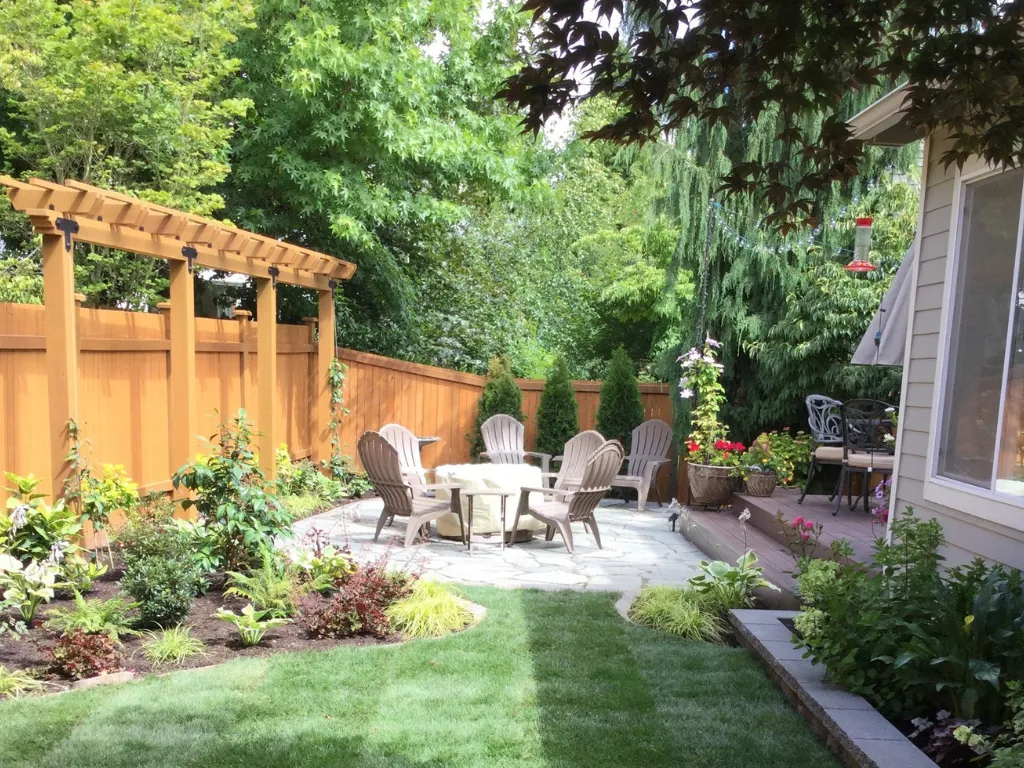
Professional Tree Services in Long Island NY
Tree
Removal
Dead, diseased or hazardous trees can pose serious risks to your home and property. Our experienced crew safely removes trees of all sizes while protecting nearby structures and landscaping.
Tree Trimming &
Pruning
Proper trimming keeps trees healthy and prevents dangerous branches from threatening your home. Our team provides expert pruning to improve both safety and appearance.
Stump
Grinding
Old tree stumps can attract pests and create hazards in your yard. Our stump grinding service removes unsightly stumps and restores your landscape.

Emergency Tree
Services
Storm damage can leave trees unstable and dangerous. Our emergency tree service team responds quickly to remove fallen trees and dangerous limbs.
Tree Cabling &
Bracing
Old tree stumps can attract pests and create hazards in your yard. Our stump grinding service removes unsightly stumps and restores your landscape.

Insect & Disease
Management
Eco-friendly treatments to protect trees and shrubs from pests and diseases—ensuring a healthy, thriving landscape.

Seasonal Risk Assessment & Maintenance
Seasonal inspections and preventative care to identify risks early, maintain tree health, and prepare your property year-round.
Tree Service Throughout Long Island
Clovis Outdoor Services proudly serves homeowners and businesses throughout
Long Island with professional tree removal, trimming and emergency services.
We regularly provide tree service in:
East Hampton NY
Suffolk County NY
Each community has unique tree care needs, and our team understands 1
the local conditions, regulations and seasonal challenges across Long Island.
See Why Long Island Homeowners Trust Clovis Outdoor Services
Our customers consistently recommend our team for safe tree removal, professional service and reliable results.
Tree Care Tips and Local Landscaping Advice
Stay informed with helpful tips about tree health, seasonal maintenance and property safety from our team.
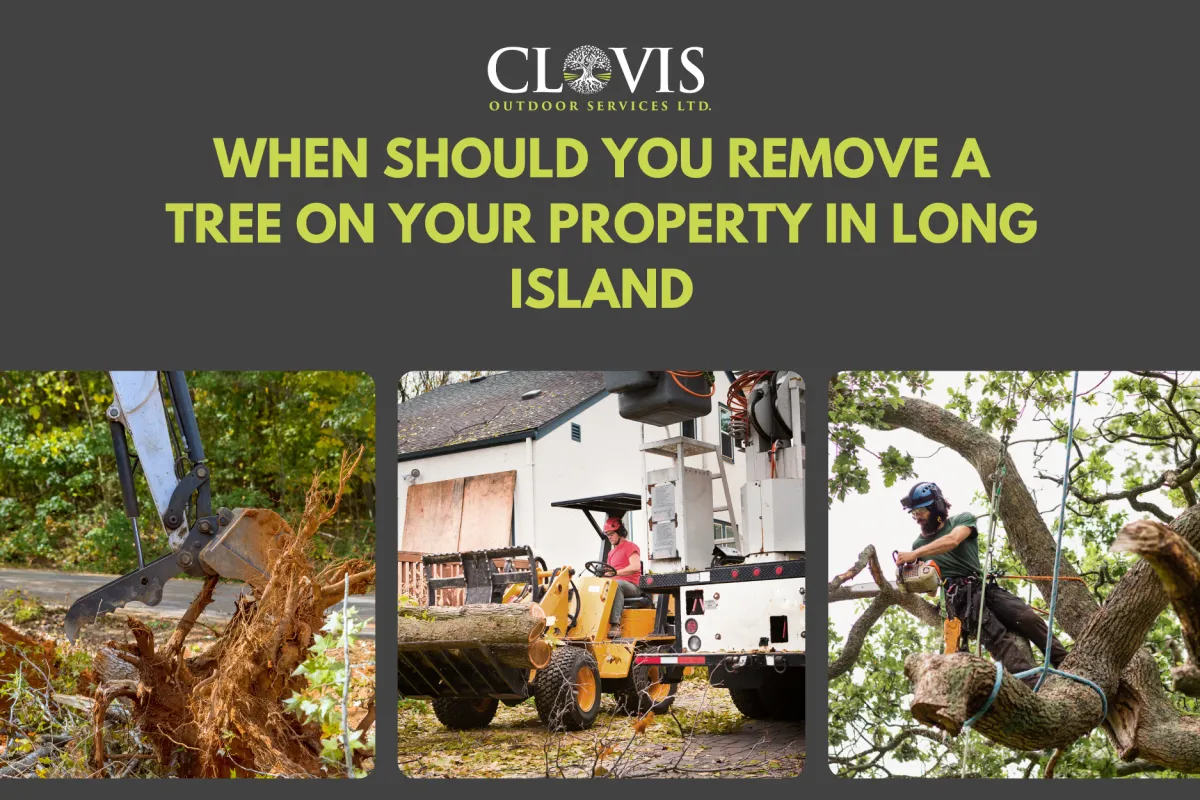
When Should You Remove a Tree on Your Property in Long Island
Trees are one of the most valuable features on any Long Island property. They provide shade, improve curb appeal, and contribute to the local ecosystem. But there are times when a tree becomes more of a liability than an asset. Knowing when to remove a tree is one of the most important decisions a property owner can make, especially in areas like Nassau and Suffolk Counties where storms, coastal weather, and dense residential layouts increase risk.
This guide answers a common question we hear from homeowners: when is it actually time to remove a tree?
The Short Answer: When Is Tree Removal Necessary?
A tree should be removed when it is dead, structurally unsafe, severely diseased, or poses a risk to people, property, or nearby structures. In some cases, removal is also necessary for construction, landscape redesign, or overcrowding.
The key is recognizing the warning signs early and acting before a minor issue becomes a major hazard.
1. Dead Trees: The Most Urgent Removal Cases
A dead tree is no longer structurally sound. Without living tissue to support it, the tree becomes brittle and unstable, making it highly susceptible to falling.
Signs a Tree Is Dead
No leaves during the growing season
Bark falling off in large sections
Dry, brittle branches that snap easily
Fungal growth, such as mushrooms at the base
No green layer under the bark when scratched
Dead trees are especially dangerous during storms, which are common across Long Island. High winds can bring down entire trees or large limbs without warning.
If a tree is confirmed dead, removal should be scheduled as soon as possible.
2. Structural Damage and Leaning Trees
Not all leaning trees are dangerous, but sudden or increasing lean is a serious red flag.
Warning Signs of Structural Failure
Tree leaning more than 15 degrees from vertical
Cracks in the trunk
Splitting or multiple trunks separating
Exposed or lifted roots
Soil heaving around the base
These issues often result from storm damage, root instability, or internal decay. Once structural integrity is compromised, the risk of failure increases significantly.
In these cases, a professional inspection is critical to determine whether cabling, bracing, or full removal is the safest option.
3. Diseased or Decaying Trees
Tree diseases can spread quickly and weaken a tree from the inside out. While some conditions can be treated, others make the tree unsafe to keep.
Common Signs of Tree Disease
Discolored or spotted leaves
Early leaf drop
Dead branches in the canopy
Soft or hollow trunk areas
Fungal growth or conks
Decay is particularly dangerous because it is often hidden. A tree may look healthy from the outside while being hollow internally.
If more than 30 to 40 percent of a tree is damaged or decayed, removal is often the safest and most cost-effective solution.
4. Storm Damage and Emergency Situations
Long Island is no stranger to strong storms, nor’easters, and heavy winds. After a storm, trees can become immediate hazards.
Post-Storm Tree Risks
Hanging or broken limbs
Split trunks
Trees leaning toward structures
Branches entangled in power lines
Uprooted trees with exposed root systems
Clovis Outdoor Services provides 24/7 emergency tree services for situations like these, ensuring dangerous trees are handled quickly and safely .
If a tree is damaged in a storm, do not attempt to handle it yourself. Professional equipment and training are required to remove storm-damaged trees safely.
5. Trees Growing Too Close to Structures
Sometimes a tree is healthy but poorly positioned.
Problems Caused by Poor Placement
Roots damaging foundations, driveways, or sidewalks
Branches rubbing against roofs or siding
Obstruction of power lines
Limited space causing stunted or uneven growth
In densely populated Long Island neighborhoods, space is limited. Trees planted too close to homes or other structures often need to be removed or replaced with more suitable species.
6. Overcrowding and Landscape Planning
In some cases, tree removal is part of improving the overall health of your landscape.
Why Remove Healthy Trees?
To allow other trees to grow properly
To increase sunlight for lawns or gardens
To improve air circulation and reduce disease risk
To enhance property layout and usability
Strategic removal can actually improve the health and appearance of your property. This is especially important in landscape design projects where balance and spacing are key.
7. Root Damage and Underground Issues
Roots are the foundation of a tree’s stability. When they are compromised, the entire tree becomes a risk.
Signs of Root Problems
Fungal growth near the base
Sudden leaning without visible trunk damage
Poor leaf growth or thinning canopy
Soil disturbance around the tree
Root damage can result from construction, soil compaction, or disease. Because roots are underground, these issues are often overlooked until the tree becomes unstable.
8. Pest Infestations That Cannot Be Controlled
Certain pests can severely weaken or kill trees over time.
Common Tree Pests in Long Island
Borers
Aphids
Scale insects
Caterpillars
While eco-friendly pest control methods can often resolve infestations, severe or repeated infestations may require removal to prevent spreading to nearby trees.
Clovis Outdoor Services specializes in environmentally responsible insect and disease management to help prevent these situations .
9. Safety and Liability Concerns
One of the most overlooked reasons for tree removal is liability.
If a tree on your property falls and causes damage or injury, you may be held responsible, especially if there were visible warning signs.
High-Risk Situations
Trees near driveways or walkways
Trees overhanging homes or garages
Large trees near neighboring properties
Previously damaged or neglected trees
Routine inspections can help identify risks before they become legal or financial problems.
10. When to Call a Professional Arborist
Not every tree problem requires removal, but every questionable tree should be evaluated.
You Should Call an Arborist If:
You notice any of the warning signs listed above
A tree has been damaged in a storm
You are planning construction or landscaping changes
You are unsure whether a tree is safe
ISA-certified arborists, like those at Clovis Outdoor Services, are trained to assess tree health, structural integrity, and risk levels accurately.
The Cost of Waiting Too Long
Delaying tree removal can lead to:
Higher removal costs due to increased complexity
Property damage from falling limbs or trees
Injury risks to family members or visitors
Spread of disease to other trees
Emergency situations that could have been prevented
Proactive removal is always safer and more cost-effective than reactive emergency work.
Final Thoughts: Make the Safe Choice for Your Property
Trees are a long-term investment, but they require ongoing care and attention. Knowing when to remove a tree is not just about aesthetics, it is about safety, responsibility, and protecting your property.
If you suspect a tree may be hazardous, the best next step is a professional evaluation. With over 15 years of experience, licensed crews, and ISA-certified arborists, Clovis Outdoor Services provides expert guidance and safe, efficient tree removal across Long Island .
About the Author: Clovis Outdoor Services is a licensed, insured, and TCIA-accredited tree and landscape company based in Stony Brook, NY. With over 15 years of experience, our team of ISA-certified arborists and outdoor professionals specializes in tree removal, pruning, landscape design, stump grinding, and eco-friendly pest control across Long Island. We proudly serve residential and commercial clients in Nassau and Suffolk Counties, including Great Neck, Huntington, Oyster Bay, Brookeville, and East Hampton. Through our blog, we share practical insights, seasonal tips, and expert guidance to help property owners care for their trees, protect their landscapes, and stay safe year-round.
If you are unsure about a tree on your property, visit https://clovisoutdoors.com/
to request a professional evaluation and free estimate.
Why Choose Clovis Outdoor Services
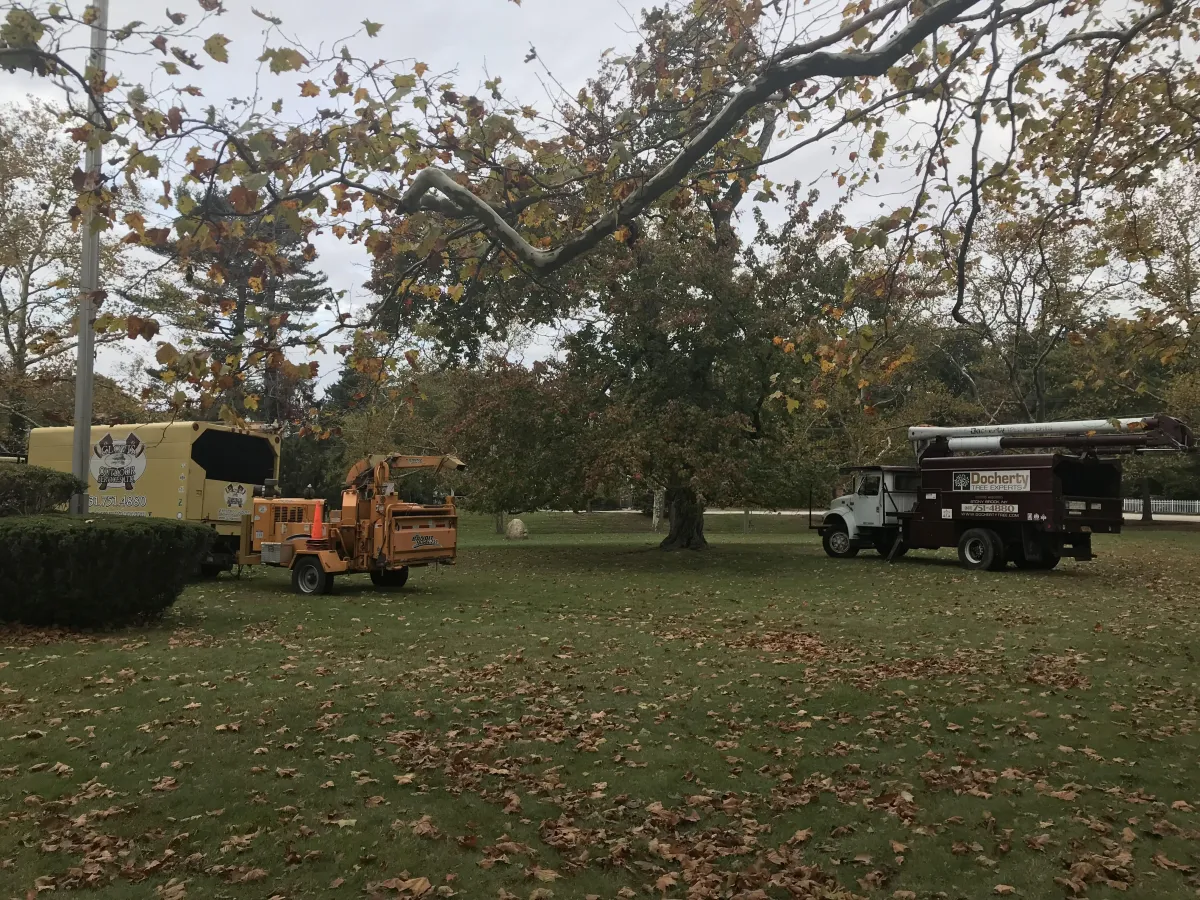
Tree work requires experience, precision and the right equipment. Our team focuses on safety, reliability and professional results for every project.
Experienced tree removal specialists
Modern equipment for safe removals
Fast storm response
Local Long Island experts
Complete job site cleanup
Why Choose Clovis Outdoor?
ISA-Certified Arborists
Locally Owned and Operated
Fully Licensed & Insured
Transparent Pricing and Free Estimates
Emergency Response Available
Why Choose Clovis Outdoor?
ISA-Certified Arborists
Locally Owned and Operated
Fully Licensed & Insured
Transparent Pricing and Free Estimates
Emergency Response Available
Tree Service Questions Long Island Homeowners Ask
How much does tree removal cost in Long Island NY?
Tree removal costs vary depending on the size, location and complexity of the tree. Smaller trees may cost a few hundred dollars while larger or hazardous removals can cost more due to the equipment and safety precautions required.
Do I need a permit to remove a tree on Long Island?
Some towns in Nassau County and Suffolk County require permits for removing certain protected trees. Our team can help homeowners understand local regulations before starting a project.
When should trees be trimmed in Long Island?
Late winter and early spring are often the best times for trimming many trees. However, dangerous branches should always be removed immediately to prevent damage or injury.
Do you offer emergency tree removal?
Yes. Clovis Outdoor Services provides emergency tree removal after storms or when trees become hazardous.
Get a Free Tree Service Estimate in Long Island NY
If you need professional tree removal, trimming or emergency tree service, our experienced team is ready to help.

CONTACT US
FOLLOW US


SERVICES
HOURS
INFO

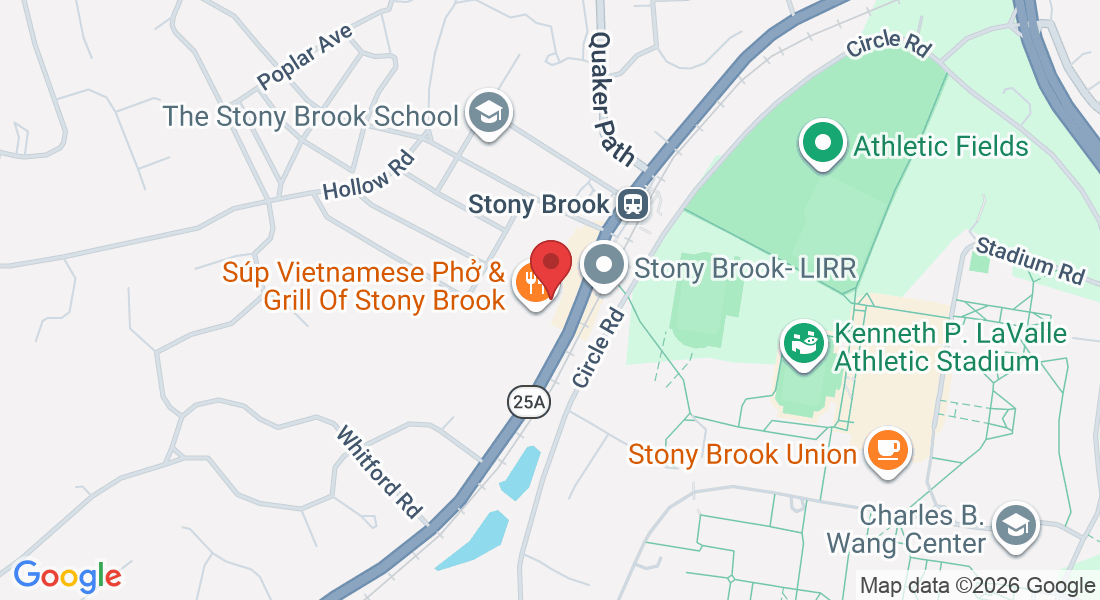
1099 N Country Rd
Stony Brook, NY 11790
United States
CONTACT US
FOLLOW US


SERVICES
LOCATIONS
HOURS
INFO
© 2026 Clovis Outdoor. All rights reserved.
Powered by Tree Care AI